
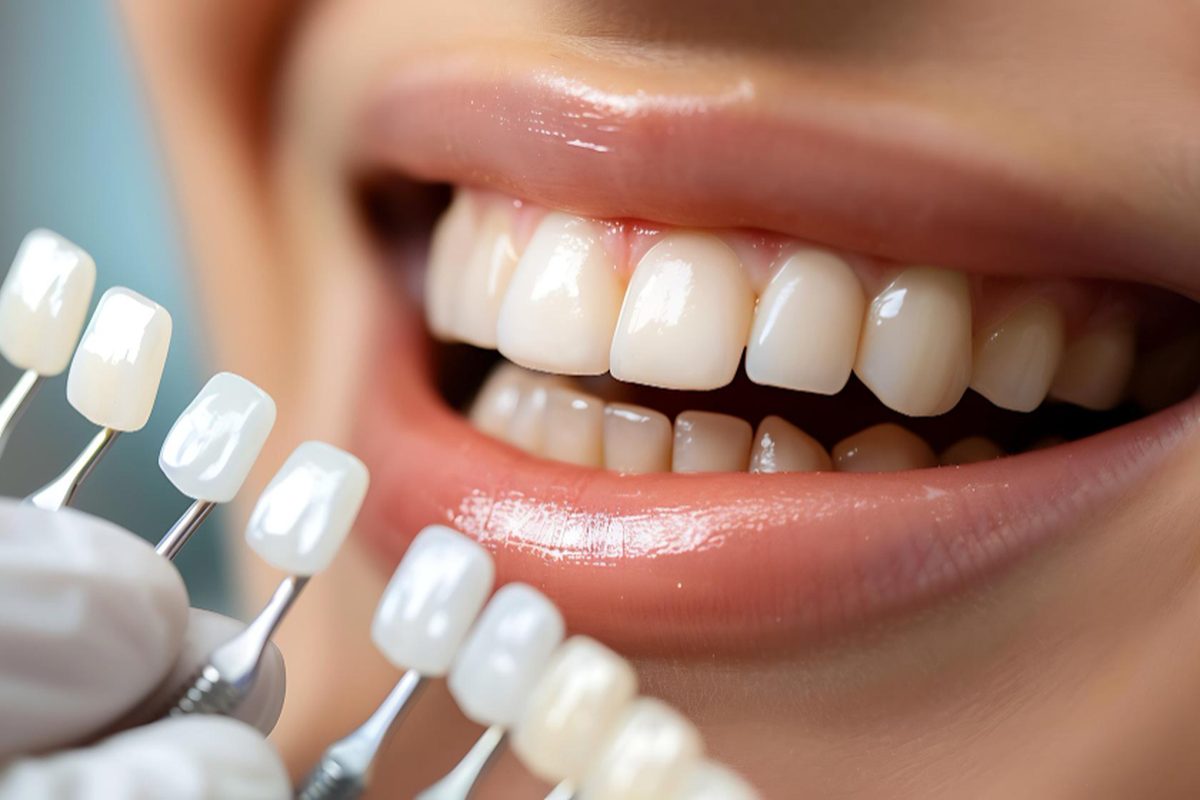
Whitening and veneers are two of the most popular ways to improve a smile. Here is how they work and how they differ.
Teeth Whitening
Oral hygiene habits, staining foods and drinks such as coffee and berries, tobacco and aging can all leave teeth dull. Injury and some medications cause stubborn stains too.
Whitening uses a carbamide or hydrogen peroxide gel that passes through the enamel and breaks up stains, brightening teeth several shades in one visit. We offer in-office and professional at-home whitening.
It works best on teeth yellowed by food, drink or tobacco. Stains from injury, childhood fluorosis or medications like tetracycline may not respond, and whitening does not change crowns or bridges. If whitening is not a fit, veneers may be.
Dental Veneers
Veneers are thin, tooth-colored porcelain shells bonded to the front of the teeth. They match the color, texture and shine of natural enamel.
They cover severe stains that whitening cannot reach, as well as chipped, cracked, misshapen, worn, crooked or gapped teeth, and they can help even out the bite. Porcelain is about as strong as enamel, and veneers remove less tooth than a crown. With good care they can last 15 years or more.
Cosmetic Dentistry in Whitesboro, TX
From stained teeth to chips and gaps, we can help. Learn more about cosmetic dentistry, call (903) 564-3451 or contact us.